How can I improve visibility in Google’s Map Pack?
Add information to your Google Maps business listing.
Now that you have a Google Maps business listing and a Google Business Profile account linked to it, you are armed and ready to optimize it for a higher ranking in local search results. But first, log in to your Google Business Profile account to add more information to your listing. Here, you will see a dashboard with several tabs down the side.

Select the “Info” tab, including your name, category, address, service area (if applicable), hours, special hours, phone number, website, products, services, attributes, and description. Here are some tips for optimizing these Google Business Profile account sections for higher ranking on Google Maps: The article Optimizing GMB is a great start.
Be consistent with your business name and address.
Keep your real business name and contact details consistent. For example, use the name customers know instead of adding search keywords to it. Check your website, Google Business Profile and important listings. Correct genuine errors and show only the locations or service areas the business actually serves.
Use a local phone number.
Google isn’t keen on toll-free (800 and 877) numbers because these types of numbers are frequently used for spam. So, instead, use a local telephone number with the area code of your location. This will help you rank higher in Google Maps and verify that your business is in that area for searchers.
Include your tracked and main number.
If you use call tracking, use a tracked number as your primary business phone number and your main number as your secondary number. This will get most of your calls through the tracked line so you can see the efficacy of your listing, but with the main number still in your listing, Google can then match your number with the one on your website and other listings.
Keep your hours updated.
Keep regular and holiday hours accurate. This helps customers avoid a wasted visit or call. Update temporary closures when needed. Accurate hours are useful business information; they do not guarantee a higher Maps position.
Please also update your holiday hours so you don’t get an “hours might differ” label on your listing.
Write a business description.
Use the business description to explain what you do and whom you serve. Write clearly and follow Google’s profile guidelines. Avoid keyword stuffing or promises that a phrase in the description will produce a particular ranking.
Properly categorize your business.
In terms of ranking, the category of your business as it appears on Google Maps is very important. For your primary category, choose the one that best represents the core offering of your business. If any other types apply, choose them as secondary categories.
Choose primary and additional categories through your Google Business Profile dashboard to rank higher in Google Maps.
Remember that you cannot add custom categories. Still, if you begin typing your primary offering into the box, you’ll see a drop-down menu of possible categories to add.
Add photos to your Google Maps business listing.
Add current photos that help customers understand the business, products or services. Use images you have the right to publish. A photo is useful evidence for a visitor, but uploading it does not guarantee a ranking increase.
Google Maps business listings without photos are less appealing to consumers and may not rank as high as listings with images.
Review your photos when products, services or premises change. Choose a useful update schedule for the business. There is no universal requirement to upload a photo every day.
Get Google reviews
Knowing that Google loves what customers love, it should be no surprise that Google Maps gives ranking favor to business listings with positive reviews. So, how do you get reviews? When you create a business listing on Google Maps, this automatically opens your business up to reviews.
But that doesn’t mean you’ll get them. You’ll need to be proactive in asking for reviews, and you’ll also need to respond to them. Responding to reviews encourages more of them and mitigates the damage of negative reviews. In addition, your responses show other prospects how attentive you are to customers and how well you resolve issues.
Reviews can be scary, but bad reviews are few and far between unless your service is truly atrocious. Plus, as long as you respond correctly, you can mitigate and even reverse the damage of a negative review.
Consolidate your Google Maps listings.
Google will discredit businesses with multiple phone numbers or locations listed for one actual business. Weed out duplicate listings and redundant information to ensure your one accurate listing will rank.
Post regularly to your Google Maps business listing.
Like Facebook, you can publish posts that appear right on your Google Maps business listing. Regularly posting like this sends signals to Google that you proactively manage your listing, which it considers when ranking. In addition, when consumers are on search engines, they have high intent, so you can get your offers in front of a ready-to-engage audience through Google posts.
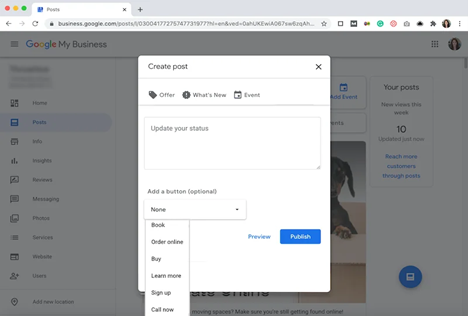
Create posts in your Google Business Profile dashboard to appear on your business listing and tell Google you are active.
How to use your website to rank higher on Google Maps
In addition to taking action directly on your business listing, there are some optimizations you can perform on your website to support a higher Google Maps ranking.
Make sure your website is responsive.
The first is ensuring your website is responsive and functions consistently across any device or screen size. This is because Google Maps business listings contain links to your website, and nearly 60% of Google searches are on mobile devices. So if your listing takes searchers to a website that requires pinching and zooming, has broken links, or is slow to load, your Google Maps ranking will suffer.
Add local keywords to your website.
Give important locations and services clear, useful pages. Include real coverage details where they help a customer. Avoid repeating city names in every heading, caption and URL. Google describes local results in terms of relevance, distance and prominence.
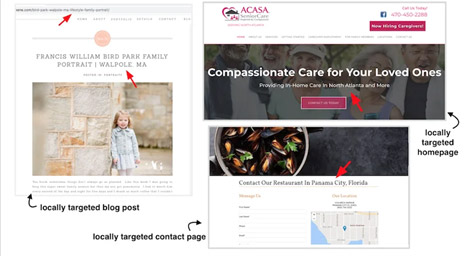
Emphasizing to Google through your website that you are prominent in your local area can help Google feel more confident in ranking your business listing on Google Maps for that area.
Embed a Google map on your website.
Another way to rank higher on Google Maps is to embed a Google map on your website, which most businesses do on the Contact Us page. Embedding a Google map is another way of telling Google that your business is located where your listing says it is. Use the same address that you have on your Google Maps business listing.
To embed a Google Map on your website, search for your business name in Google Maps. Next, click “Share” in your listing and select the “Embed a map” tab. Finally, copy and paste the link on your business’s contact page.
Recap and 13 Steps to start with:
- Claim your Business Profile
- Complete every section of your Google Business Profile account
- Be meticulous with contact information
- Select primary and secondary categories
- Mark off applicable attributes
- Write a complete “from the business” description
- Publish Google posts weekly
- Upload new photos weekly
- Answer questions
- Collect and respond to reviews
- Add your products and services
- Set up messaging
- Maintain your Business Profile
With these optimizations, you can turn your Business Profile into the best free customer acquisition tool you didn’t know you had. So let’s get into it.